

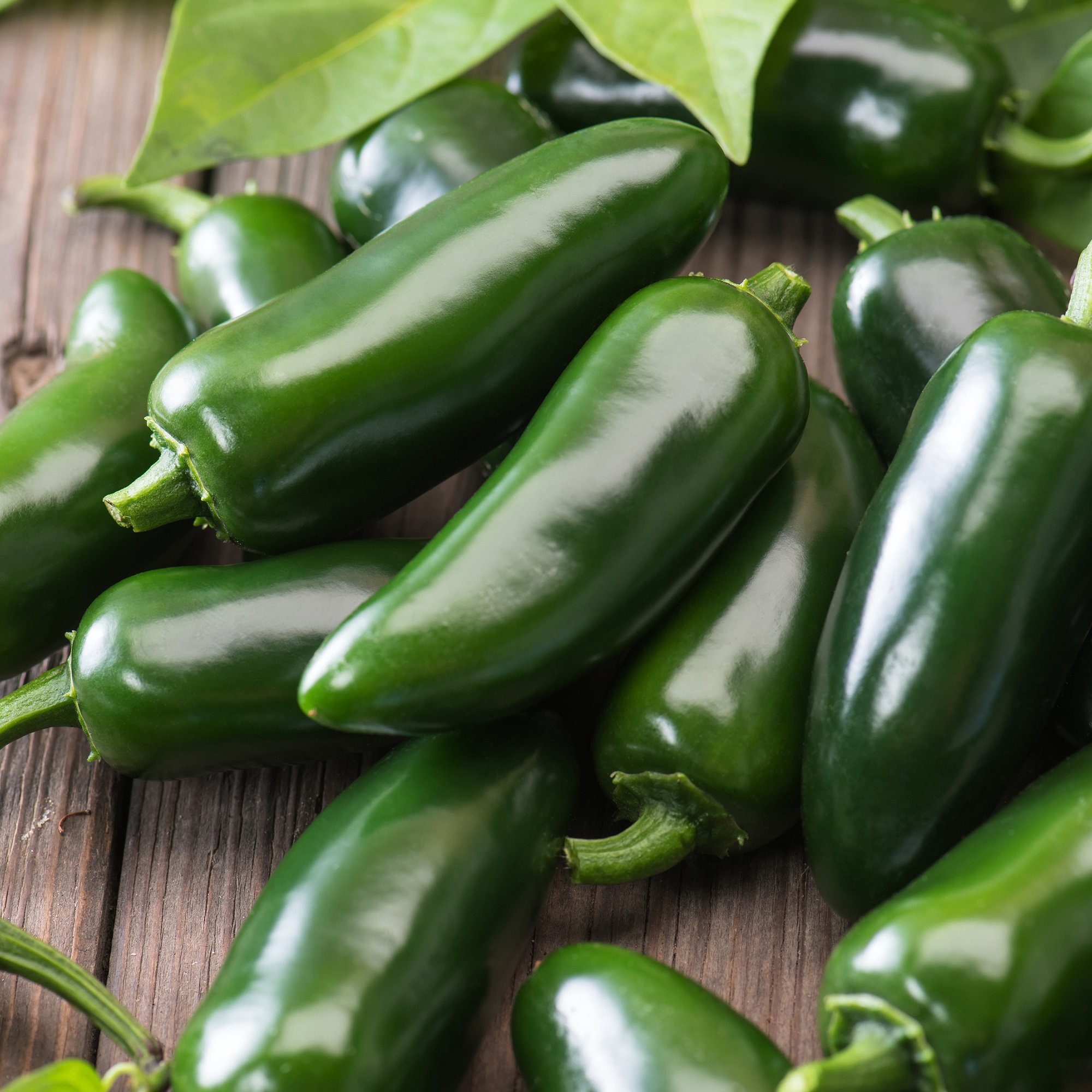
Chilli Pepper Jalapino - Capsicum annuum

Full sun.

Jul–Sep depending on sowing time.

Mar–May outdoors after risk of frost.

45–75cm height; 30–50cm spread.
Overview
A popular, medium-heat chilli producing thick-walled, glossy green fruits that ripen red. Compact plants crop heavily when grown in warmth and full sun. Jalapeños are best picked green for a fresh, slightly tangy flavour, or left to ripen for deeper sweetness and heat. Ideal for stuffing with cheese, slicing into nachos, pickling, or blending into salsas and sauces.
- Vegetable Type: Chilli Pepper Jalapino
- Key Characteristic: Medium heat with thick flesh – perfect for stuffing, slicing and pickling.
- Hardiness: (tender annual) – protect young plants from frost.
PLANTING ADVICE
Plant in rich, well-drained compost. Best grown in large pots or grow bags in a greenhouse or sunny patio spot. Can be planted in the ground in a very warm, sheltered position.
- Outdoor cultivation
Grow outdoors only in a warm, sheltered, frost-free position from late spring to early autumn. Protect from cold nights.
- Greenhouse cultivation
Well suited to greenhouse cultivation. Maintain warmth, ventilation and regular feeding for best yields.
CARE & HARVEST
Keep soil moist and weed free. Feed weekly once flowers appear using a high-potash fertiliser. Remove any damaged leaves to improve airflow and check plants regularly for pests. Harvest fruits promptly to encourage further cropping.
- Watering: Water regularly and consistently, keeping compost moist but not waterlogged. Avoid letting plants dry out during flowering and fruiting as this can reduce yields.
- Feeding: Feed weekly with a high-potash liquid fertiliser once flowering begins to support fruit production.
- Cutting and prunning: Pinch out growing tips once plants are established to encourage bushier growth.
- Harvesting: Pick once fruits reach full size and colour. Regular harvesting encourages the plant to produce more chillies.
- Pest and diseases: Check regularly for aphids and red spider mite, especially under glass.
Verve recommends...
- Pinch out the first flowers to help young plants build strength before heavy fruiting.